Why Spices Realistic Illustrations Belong in Your Creative Workflow
If you have ever searched for food-themed visuals that look authentic without requiring hours of custom rendering, you have likely encountered the Spices Realistic illustration set. This collection, part of the Special AI EPS series, offers three distinct variations of spice-related artwork in AI, EPS, and JPG formats. Designed for both Mac and Windows users, it promises organized layers, consistent details, and easy customization. But like any creative asset, the value you get depends heavily on how you choose, use, and adapt it. Many people download illustration sets expecting instant perfection, only to find mismatched styles, confusing file structures, or formats that do not work for their intended medium. This article walks through the most common missteps and shows you how to avoid them so you can make the most of what Spices Realistic has to offer.
What Spices Realistic Offers and Why It Matters
Spices Realistic is a vector illustration collection focused on rendering spices in a natural, lifelike manner. The set includes three variations, giving you options for different visual contexts without having to source multiple assets. Each file is structured with neat layers, making edits straightforward even for beginners. The inclusion of AI, EPS, and JPG formats ensures compatibility across design software, from Adobe Illustrator to simpler editing tools. For entrepreneurs creating packaging, bloggers enhancing recipe posts, or educators building food-related infographics, this kind of consistency saves time and preserves visual quality.
The realistic style matters because it communicates authenticity. In food marketing, health content, or culinary education, viewers respond better to imagery that feels genuine. Flat icons have their place, but when you need texture, depth, and a sense of real ingredients, a realistic approach carries more weight. That is the core appeal of this set: it fills a gap between overly stylized icons and custom photography.
Mistake One: Assuming All Vector Files Behave the Same Way
A common misunderstanding is that any vector file can be opened, edited, and exported in exactly the same manner across all software. This is not true. While AI and EPS files are both vector formats, they handle elements like gradients, effects, and embedded images differently. EPS files are more universally compatible, but they may not preserve every editing feature in older software versions. AI files are native to Adobe Illustrator and offer full layer control, but they can cause issues if opened in non-Adobe programs.
With Spices Realistic, the set provides both formats intentionally. The AI versions are ideal if you use Illustrator and want to modify colors, resize elements, or rearrange components without losing quality. The EPS versions work well as fallback files for other vector applications like CorelDRAW or Affinity Designer. The JPG files serve as ready-to-use previews or web assets. A better approach is to decide which application you will edit in before purchasing. If you only have access to a basic editor, the EPS files are your safest option. If you rely on Illustrator, the AI files give you the most flexibility.
Mistake Two: Ignoring Layer Structure and Organization
One of the strongest selling points of this collection is its neatly organized file and layer structure. Yet many users skip exploring this entirely. They open the file, see everything grouped together, and assume it will be difficult to customize. They may abandon the asset or force it to work as-is, missing the opportunity to adapt it to their branding needs.
When you open a well-organized AI file from Spices Realistic, you should see clearly named layers for each spice variation, background elements, and decorative details. This structure allows you to change the color of a single spice jar without affecting the rest of the composition. You can hide layers you do not need, duplicate elements, or rearrange the layout for different contexts. Taking five minutes to familiarize yourself with the layer names and groupings can turn a one-size-fits-all illustration into a fully customized visual asset.
If you are new to working with layered vector files, start by opening the file in your preferred software and clicking through the layers panel. Look for folder groups labeled by variation or element type. Try changing one color to see how the rest of the file responds. This small step gives you control and confidence.
Mistake Three: Overlooking Format Compatibility for Your Workflow
Another frequent oversight is not checking whether the file formats match the tools you actually use. The Spices Realistic set includes AI, EPS, and JPG, but if you work primarily in a web-based editor like Canva or a mobile design app, you may need to convert files to SVG or PNG first. While EPS files can sometimes be imported into these platforms, results vary, and you may lose editability.
The practical fix is straightforward. Before purchasing, identify your primary editing environment. If you use Adobe Illustrator, InDesign, or similar desktop vector software, the AI files will give you full control. If you use a cross-platform tool like Affinity Designer, EPS is a reliable choice. If you only need static images for slides, social media, or print layouts, the included JPGs may be sufficient. For those who need scalable vectors on web platforms, converting the EPS to SVG using a free converter or via Illustrator export is a simple step that preserves quality. Taking this compatibility check seriously saves you from downloading a file you cannot use effectively.
Mistake Four: Neglecting Consistency Across Variations
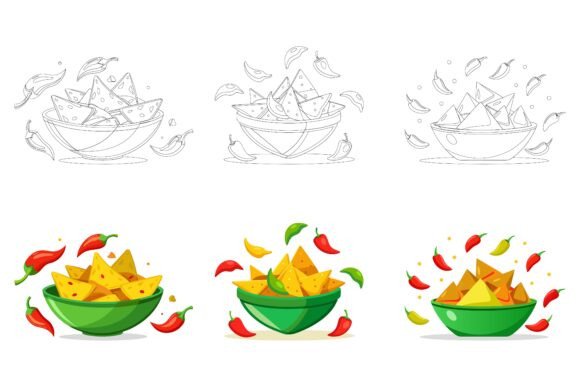
Three variations are included in the Spices Realistic set, and each one has its own visual style, lighting, and composition. A mistake some users make is mixing variations without considering how they look together in a single layout. For example, using one variation for a hero image and another for a supporting graphic can create a disjointed visual story if the color temperatures or shadow styles differ.
The better approach is to treat the three variations as complementary tools rather than interchangeable pieces. Evaluate each one against your overall color palette, typography, and design tone. You might use one variation for the main visual and another for a cropped detail or background texture. Or you might commit to a single variation across an entire project for a cohesive look. The set is designed to give you options, not confusion. Reviewing the previews thoroughly before downloading ensures you choose the right starting point.
Mistake Five: Underestimating Customization Potential
Some users treat downloaded illustrations as final assets that cannot be changed. They place them into designs exactly as they appear, missing the chance to align them with their brand identity. With Spices Realistic, you are encouraged to edit, change colors, and modify icons easily. The files are structured for modification, not for rigid usage.
For example, if the default spice jar colors do not match your brand palette, you can select the relevant shapes and adjust the fill. If you need a horizontal layout instead of a vertical one, you can rotate and reposition elements. If you want to remove a background label or add your own text, the layer structure makes it possible. The mistake is treating the file as read-only. The smarter move is to open it, experiment with one or two changes, and see how far you can adapt it. This is especially valuable for small business owners and freelancers who need unique visuals without hiring a designer.
Mistake Six: Misjudging Appropriate Use Cases
Spices Realistic is suitable for print, web, symbols, apps, and infographics. Yet some users assume it works perfectly for every medium without adjustment. A detailed realistic illustration that looks stunning on a poster may become cluttered when scaled down for an app icon. Similarly, a rich texture that prints beautifully at 300 DPI may cause file bloat or slow loading on a website.
To avoid this, think about your primary output before editing. For print projects, keep the full resolution and details. For web use, consider simplifying the color depth or reducing the file size while maintaining visual quality. For app icons, test the illustration at the actual icon size to see if details remain readable. The JPG versions are pre-rendered and ready for many digital uses, but for scalable web graphics, exporting to optimized PNG or SVG from the vector file gives you better control over quality and file weight.
What to Check Before You Buy or Download
Before you commit to Spices Realistic or any similar collection, take a moment to verify a few key details. Confirm that your design software supports the included formats. Read the file description to understand the number of variations and whether they cover the specific spices you need. Check the example images for color accuracy and style consistency. If the set includes both AI and EPS, note which version offers the most editing flexibility in your workflow. Look for mentions of layer organization, as this directly affects how easily you can customize the files. Finally, consider your output medium—whether print, digital, or both—and whether the included formats and resolutions match those requirements.
Practical Steps to Get the Most Out of Spices Realistic
Once you have the files, a few intentional steps will help you avoid common pitfalls. Start by opening the AI file in your vector editor and exploring the layer panel. Rename layers if needed to match your project structure. Choose one variation to work with first, and test a color change or size adjustment to ensure everything functions as expected. Export a test file in your target format and check it at actual size on your intended medium. If you plan to use multiple variations, place them side by side early in the process to confirm visual harmony. Keep a backup of the original files so you can always revert if needed.
For those who are less experienced with vector editing, the JPG versions provide a simple fallback. You can place them directly into documents, presentations, or web layouts without any modification. But even then, taking the extra step to open the EPS in a free vector viewer and export to your preferred format can give you more versatility down the road.
Choosing Quality Over Quantity
In a marketplace saturated with generic icons and rushed illustrations, a well-constructed set like Spices Realistic stands out when used thoughtfully. The combination of multiple formats, clean layers, and realistic detailing makes it a practical asset for a wide range of creators. But the quality of your final output depends less on the file itself and more on how you approach it. Checking compatibility, respecting the layer structure, customizing with purpose, and matching the visual style to your medium are the habits that separate a good result from a great one. Whether you are a marketer building a campaign, an educator designing a visual guide, or a hobbyist creating recipe cards, taking these steps ensures the illustration works for you, not the other way around.
Spices Realistic offers a solid foundation. Your decisions in preparation, editing, and output determine the finished quality. With a little attention to the details that many overlook, you can transform a well-made asset into something that feels uniquely yours.