Circle Design and Beautiful Spirals for Your Creative Projects
If you have ever stared at a blank canvas, a new document, or an empty slide and wished for something that simply works, you already understand the value of a solid design element. Circle design, with its clean geometry and natural flow, has a way of bringing order to creative chaos. But it is not just about looking good. Whether you are building a brand from scratch, decorating a living room, or putting together a presentation for Tuesday morning, circular motifs and beautiful spirals can carry a surprising amount of weight without overwhelming your message.
Let’s break down what circle design actually means in practical terms and, more importantly, where it fits into real projects for real people.
What Circle Design Really Means for Everyday Work
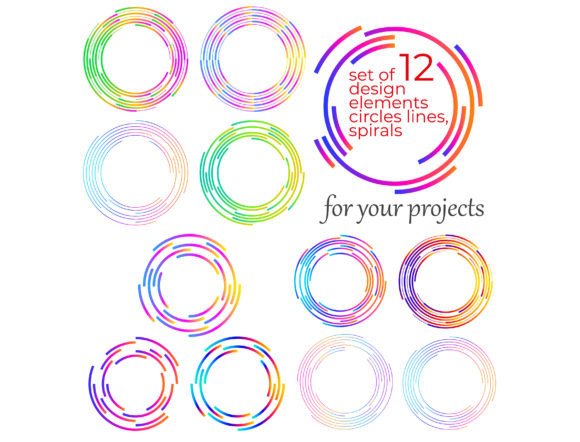
At its core, circle design refers to the intentional use of circular shapes, rings, arcs, and spiral patterns as foundational elements in a composition. Unlike rigid geometric grids that can feel cold or overly technical, circles bring a sense of movement, completeness, and softness. A well-placed spiral can guide the eye naturally across a page or screen, while concentric rings can create depth without adding clutter.
For someone designing a logo, a single circular motif can communicate unity or community. For a scrapbooker, a spiral border adds whimsy and flow. And for a marketer putting together social media graphics, these elements provide structure that feels polished without requiring hours of manual alignment. The beauty of circle design is that it works across media. You drop a vector circular frame into your layout, and suddenly the whole composition breathes a little easier.
Where Creators and Freelancers Actually Use Circle Design
If you are a freelancer juggling multiple clients, you need assets that move fast and look intentional. Circle design elements save you from rebuilding the wheel every time.
Logo Creation and Brand Identity
Circular logos remain one of the most versatile choices in branding. They fit neatly into profile pictures, app icons, and favicons. When you receive an EPS file with multiple circular motifs, you can layer a client’s name over a thin spiral, wrap text around a ring, or use a simple circle as a badge. I have seen freelancers take a single spiral pattern and rotate it across five different brand color palettes, and each one felt unique. The key here is that circles are neutral enough to support almost any industry, from wellness to tech.
Packaging and Product Design
Think about the last time you picked up a product because the packaging caught your eye. Chances are, there was some circular element at play, whether an embossed spiral on a skincare bottle or a circular label on a candle jar. For small business owners designing their own packaging, having a set of ready-to-use circle design elements in EPS format means you can test layouts quickly. You can scale a spiral pattern to fit a product tag, use concentric rings as a background texture, or isolate a single circular motif for a minimalist sticker.
Scrapbooking, Card Making, and Print Projects
Paper crafts might seem old school in a digital world, but they remain hugely popular among hobbyists and educators. With circle design, you can elevate a simple greeting card into something that feels curated.
- Card making: A spiral motif printed in gold foil on the front of a birthday card adds a premium feel without heavy embellishment. You can layer circles of different sizes behind a sentiment to create depth.
- Scrapbooking: Use circular frames to highlight photos, or let a subtle spiral pattern serve as a background for journaling. I have seen scrapbookers use overlapping circles to create a visual storyboard that feels cohesive without being busy.
- Printables and planners: Many educators and hobbyists sell printable planners. Circular elements work beautifully as section dividers, habit trackers, or decorative borders. A simple ring can frame a weekly goal neatly.
Digital Applications: Websites, Apps, and Infographics
For web designers and app developers, circle design is a workhorse. It is not just decoration; it serves functional roles in user interfaces.
When you are designing a dashboard, circular progress indicators are intuitive. Users immediately understand visual data better when it is presented in a ring or spiral format. Similarly, avatar frames, notification badges, and icon backgrounds often work best as circles because they scale well across devices. If you are building a mobile app and need a set of consistent UI elements, having a library of circle design assets means you can maintain visual rhythm across screens without re-coding shapes every time.
Infographics also benefit heavily from circular elements. A spiral can represent a timeline or a flow of information naturally. Instead of a rigid bar chart, a circular diagram makes data feel approachable. This is especially useful for educators preparing presentation slides or marketers crafting data-heavy content for blogs and social media.
Interior Design, Trendy Prints, and Lifestyle Projects
The influence of circle design extends beyond screens and paper. If you are into interior design or home decor projects, these elements translate well into physical spaces.
Consider a gallery wall in a modern apartment. Instead of standard rectangular frames, circular prints break the monotony. A set of three concentric circle prints arranged in a row creates a focal point without needing large furniture. Even a single wall decal with a spiral pattern can transform a small reading nook. For those printing their own wall art at home, vector files in EPS format allow you to scale a design to any size without losing crispness. You can print a large spiral mural for a studio or a tiny circular accent for a hallway.
Fabric prints also benefit from circular patterns. If you are designing custom textiles, whether for throw pillows, tote bags, or curtains, a repeating circle motif feels contemporary without being loud. It works equally well in neutral tones for a minimalist look or in bold colors for a bohemian vibe.
Educational Materials and Presentations
Teachers, trainers, and content creators who prepare learning materials know that visual hierarchy matters. Students engage more when content is organized clearly. Circle design helps break text-heavy slides into digestible sections.
For example, you can use a circular flow chart to explain a process. Instead of listing steps in a bullet point, place each step in a ring and connect them with arcs. This works well for subjects like science cycles, historical timelines, or business workflows. If you are creating a workshop deck, a spiral graphic that winds toward a central point can visually represent a journey or a concept like growth. It keeps learners oriented and reduces cognitive load.
Presentations that rely solely on text and stock photography often feel flat. A well-placed circular design element acts as a visual anchor. It does not compete with your message; it supports it.
What to Consider Before Choosing Your Circle Design Assets
Not every circle design element is going to suit your specific project. Before you download or purchase a set of vector files, take a moment to think about how you intend to use them.
- File format matters. EPS files are great because they are scalable and editable in vector software. But if you work primarily in a specific tool like Canva or Affinity, make sure your software can handle the files. Some EPS sets require unzipping and manual import.
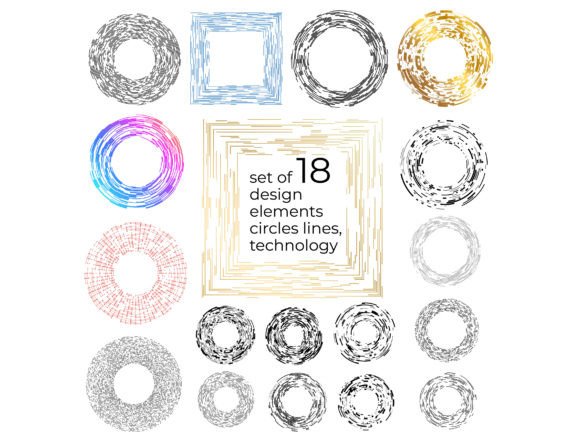
- Style consistency. Look for a collection that offers variety in line weight, density, and complexity. A single style may work for one project but feel repetitive across many. A good set includes both thin, delicate spirals and bolder, solid circles so you can mix and match.
- Scalability. Since circles are geometric, they can become pixelated if not handled properly. Vector formats eliminate this risk, but always test a design element at the size you actually intend to use it before committing.
- Intended medium. A spiral that looks stunning on screen may not print the same way if it relies on thin lines or low contrast. If you are printing on textured paper or fabric, choose designs with enough visual weight to hold up physically.
Real Outcomes from Real Users
The best way to gauge whether circle design fits your workflow is to observe how others are already using it. A marketer I know recently rebranded an entire product line using circular badges and spiral backgrounds. She cut her design time in half because the elements were ready to drop in. A scrapbooking enthusiast told me she uses circular frames to anchor journaling on cluttered pages. It forces her to edit what she includes and keeps layouts breathable. An educator shared that his students retain more information when diagrams are circular rather than linear. He said it changes how they connect concepts.
These outcomes are not about aesthetics alone. They are about efficiency, clarity, and consistency. When you have a solid set of circle design elements in your toolkit, you stop reinventing solutions and start applying them.
Adding Style Without Adding Extra Work
Ultimately, the appeal of circle design and beautiful spirals is that they give you style without demanding extra effort. You do not need to be a professional illustrator to create a balanced layout. You just need the right building blocks. Whether you are designing a logo for a client, decorating your home office, building a course presentation, or creating packaging for your small business, these elements scale to your skill level.
When you receive a zip file containing EPS files, you are getting flexibility. You can open them, edit colors, resize, rotate, and combine them however you want. They are not locked templates. They are raw material for your own creativity. And in a world where every project demands both speed and quality, that flexibility matters more than ever.